

Fun Ways for Parents and Educators to Spark a Child’s Imagination
Imagination is one of the most powerful tools a child can have. It helps kids explore, learn, and grow while seeing the world in creative ways. Every child has the ability to dream, invent, and think outside the box—and parents and educators can help light that spark.
Here are some practical ideas to help children unleash their creativity!
What Is Imagination?
Imagination is the ability to picture things that aren’t real—whether it’s stories, inventions, or magical worlds in your mind. It’s closely tied to creativity, problem-solving, and thinking in new ways.
Young children often blur the lines between fantasy and reality. They may insist their imaginary friend is real or think a monster is hiding under the bed. That’s completely normal! As they grow, they gradually learn to distinguish between make-believe and reality.
Why Imagination Matters
Imaginative play has many benefits. It helps kids remember information, improve language skills, and understand emotions.
Creative thinking also builds confidence and problem-solving skills that will last a lifetime.
Through pretend play, children try different roles, explore new ideas, and learn to work with others. They practice sharing, taking turns, resolving conflicts, and expressing feelings—skills that are essential for social and emotional growth.
Ways to Encourage Imaginative Play
1) Ask “What Would It Be Like?” Questions
Open-ended questions spark creativity. Try asking things like:
- “What would it be like to fly like a bird?”
- “What would it be like if the grass was purple?”
Children can talk, draw, or act out their ideas, helping them visualize and share their thoughts.
2) Twist the Story
After reading a book together, ask:
- How else could this story have ended?
- What if the story happened in a different place?
- What if the character made a different choice?
Older kids can retell the story from another character’s perspective or combine characters from different books to create a brand-new adventure.
3) Lead by Example
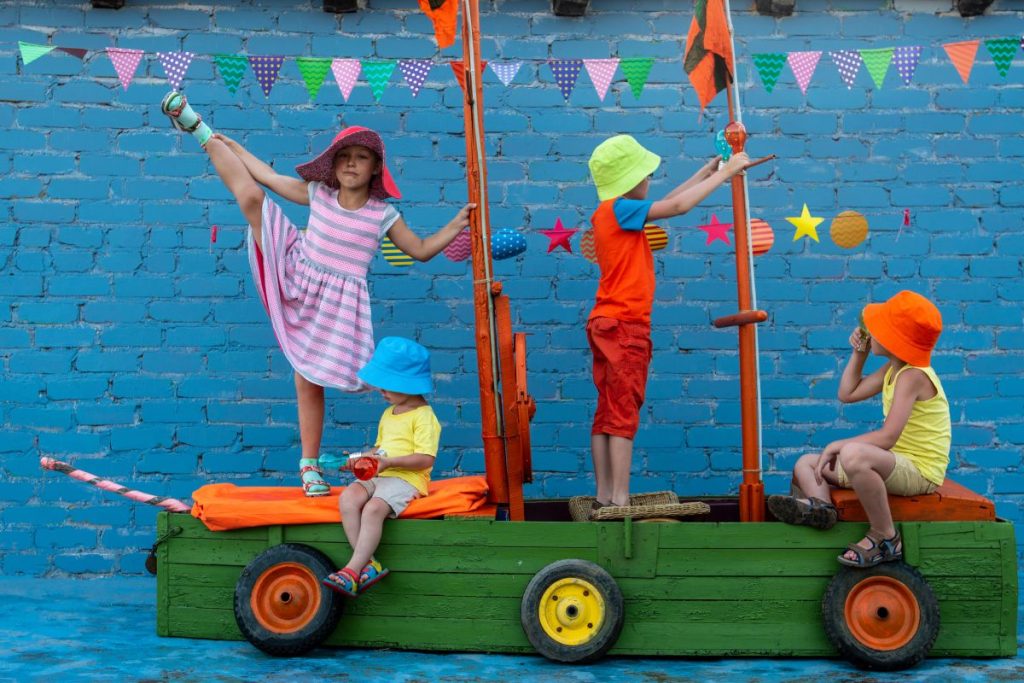
Children learn by watching. Join in imaginative play! Use toys, art supplies, or everyday items in creative ways. Turn blocks into castles, stuffed animals into a zoo, or toy cars into a racetrack. Show them it’s okay to be playful and imaginative.
4) Encourage Curiosity
Help children see the world in new ways. Notice patterns in puddles, shapes of leaves, or colors in the sky. Take walks, visit museums, or explore new places. Curiosity fuels imagination!
5) Create a Story Box
Fill a small box with objects like toys, shells, buttons, or fabric scraps. Let children invent stories using the items. They can tell their story aloud, act it out, or dictate it to you while you write. Model storytelling with your own tale to get them started.
6) Explore Family Photos
Looking at family photos can inspire stories. Ask:
- “What do you think happened right before this picture?”
- “What could happen next?”
Children can also draw or act out moments that aren’t in the photos, creating new stories from real-life memories.
7) Offer Simple Materials
Sometimes, basic items spark the most creativity. Cardboard boxes, paper, or simple art supplies can become rockets, castles, or secret hideouts. Let children create freely and see where their imagination takes them.
8) Make Time for Free Play
Unstructured play is essential. Let children lead their games and decide how the story unfolds. Offer gentle suggestions if needed, but allow them to explore their own ideas.
Let Imagination Take Flight!
Supporting imaginative play helps children grow, learn, and dream. With time, encouragement, and simple materials, kids can turn everyday moments into extraordinary adventures.
Try story kits, creative activity packs, or learning apps that inspire imagination. With your guidance, a child’s creativity can take them anywhere!
Similar Posts
Sweet Chocolate Facts from Around the World!
How to Raise Brave, Kind Fantasy Adventurers (No Dragons Required!)

The Tale of Leo and Buddy: A Lesson in Friendship
Let’s Keep In Touch!
Subscribe for magical stories, events, printable activities, and special surprises for kids, parents, and teachers!